


Your Chicago Guide to Maximizing Your Honda Trade-In Value
Author: Victory Honda of Chicago Northside
Trading in your current Honda is a significant financial decision, whether you’re looking to upgrade to a new model or adjust to your changing driving needs. The process can seem overwhelming, filled with questions about value, preparation, and negotiation. As a dealership built on trust and a deep connection to the community, Victory Honda Chicago Northside has guided thousands of drivers from Chicago, Lincolnwood, Evanston, Skokie, and Niles through this process. Drawing from our extensive experience, this guide demystifies every step, providing you with the knowledge to secure a fair and transparent deal for your vehicle.
Key Takeaways (TL; DR)
- Establish Your Baseline: Before visiting a dealership, determine your Honda’s market value. Use trusted online tools and research local Chicago listings to set a realistic price expectation.
- Presentation Is Key: A vehicle that is thoroughly cleaned, detailed, and supported by a complete service history will consistently command a higher trade-in offer. Your effort in preparation directly translates to financial gain.
- Organize Your Paperwork: Having your vehicle’s title, maintenance records, and a recent vehicle history report ready will build credibility and simplify the appraisal, often resulting in a stronger valuation.
- Understand Chicago’s Needs: Recognize which Honda models are in high demand in the Chicagoland area. An all-wheel drive CR-V for lake-effect snow or a fuel-efficient Civic for navigating the Kennedy Expressway holds greater value due to local demand.
- Negotiate Separately: Always treat your trade-in as an independent transaction. Finalize the price for your new vehicle purchase before you begin discussing your trade, using written offers from other dealerships as leverage.
- Leverage Tax Advantages: Trading in your vehicle in Illinois provides a significant sales tax benefit. The value of your trade is subtracted from the new car’s price, and you only pay sales tax on the difference, saving you hundreds or even thousands of dollars.
How Can I Figure Out My Honda’s Real Value in Chicago?
Your first move must be to get an accurate and realistic idea of your Honda’s current worth. This number is the bedrock of your entire trade-in experience. Without a data-driven value in mind, you cannot confidently assess whether you are getting a fair offer. This figure will be your guide through every negotiation, whether you trade with a dealership or choose to sell privately.
To build a complete financial picture, it’s wise to consult multiple sources. Start with established online valuation platforms. Authoritative websites like Kelley Blue Book (KBB) and Edmunds provide detailed estimates based on your Honda’s specific details, including its year, model, trim, mileage, overall condition, and its location here in the Chicago area. Be sure to obtain both the “trade-in value” and the “private party sale value,” as these figures can differ significantly.
Beyond these digital estimators, you should see what similar Hondas are selling for right here in Chicagoland. Look through listings on sites like Autotrader, focusing on vehicles in Chicago, Lincolnwood, Evanston, and nearby suburbs. This real-world research helps ground the online estimates in local market realities and sets a practical expectation for your vehicle. Pay close attention to how trim levels affect the price—for example, a 2026 Honda Accord Hybrid Touring will be valued differently than an LX trim because its advanced features and efficiency greatly impact its desirability and worth. This preparation is your most powerful tool in the process.
Should I Trade My Honda In or Try to Sell It Myself?

The decision between trading your Honda at a dealership and selling it privately comes down to a simple question of priorities: do you prefer convenience and security, or are you focused on achieving the highest possible profit? A dealership trade-in offers the most straightforward and stress-free route, while a private sale often brings a higher price but demands a substantial investment of your time, effort, and personal risk management.
Trading In Your Honda
- Ultimate Convenience: This is the chief advantage. You can drive your current vehicle to the dealership and leave in your new one, often in a single visit. The dealership team manages all the complex paperwork, from title transfers to paying off any outstanding loan with your financial institution.
- Unmatched Speed: The entire process of appraising your trade and purchasing a new car can be completed in a few hours. You avoid the lengthy ordeal of creating online advertisements, responding to messages from potential buyers, and arranging test drives with strangers on busy roads like Sheridan Road or Touhy Avenue.
- Significant Tax Savings: Illinois provides a valuable tax incentive for trade-ins. The assessed value of your trade is subtracted from the price of your new vehicle before sales tax is calculated. If you buy a $45,000 vehicle and your trade is worth $20,000, you only pay sales tax on the remaining $25,000, which can result in substantial savings.
Selling Your Honda Privately
- Potentially Higher Price: This is the main appeal of a private sale. By acting as the seller, you can often market your Honda for a price closer to its retail value. You are effectively capturing the profit margin a dealer would otherwise build in to cover costs like reconditioning, marketing, and overhead.
- Total Control: You are in charge of the entire sales process. You decide on the asking price, you vet interested parties, and you determine the conditions of the sale and any test drives.
- Considerable Challenges: Selling a vehicle on your own is a major undertaking. You are responsible for taking high-quality photos, writing a persuasive ad, and fielding inquiries from the public—many of whom may not be serious buyers. You also take on the risks associated with payment fraud and the legal duties of correctly completing all transfer paperwork with the Illinois Secretary of State.
Ultimately, the best path is a personal one. If you want a seamless, secure, and worry-free way to get into your next vehicle, the trade-in process is designed for you. If you have the time, are comfortable with the associated tasks and risks, and wish to maximize your financial return, a private sale might be the better choice.
How Do I Prepare My Honda to Get the Best Trade-In Offer?
Properly preparing your Honda for its appraisal is essential for unlocking its maximum value. A vehicle that looks, smells, and feels well cared for signals to an appraiser that it has likely been maintained mechanically, justifying a higher valuation. Your goal is to present your car in its absolute best condition to make an outstanding first impression.
1. What Documents Are Crucial for a Smooth Appraisal?
Before you start cleaning, take a few minutes to gather and organize your paperwork. Having a complete and orderly file shows professionalism and can significantly accelerate the entire transaction.
- The Title: Find your vehicle’s title, which is the legal proof of ownership. If you have an outstanding loan, the lienholder (your bank or credit union) physically holds the title. You will need to contact them to get the precise 10-day payoff amount for your loan.
- Service Records: Compile every receipt you can find for maintenance and repairs. A thorough service history is powerful evidence of responsible ownership and can substantially increase your Honda’s perceived value.
- Owner’s Manual: Make sure the original owner’s manual portfolio is in the glove compartment. An appraiser and future buyers will notice its presence.
- Vehicle History Report: It is a proactive and transparent move to get your own vehicle history report from a reputable source like CarFax. This allows you to review it yourself and be ready to discuss any incidents that might appear.
2. How Should I Detail My Vehicle for a Trade-In?
First impressions are made in an instant. A meticulously clean Honda immediately appears newer, better cared for, and more valuable.
- Exterior Wash and Wax: Give your car a thorough hand wash. Chicago weather, from road salt in winter to pollen in spring, can be harsh on a car’s finish. Pay close attention to wheels, tires, and all glass surfaces. Applying a quality wax not only enhances the paint’s shine but also protects it, a detail that shows you care for your vehicle.
- Interior Detailing: This is where your effort can produce the biggest return. Vacuum every interior surface, including carpets, seats, floor mats, and the trunk. Use appropriate cleaners for the dashboard, door panels, and console, and don’t forget to wipe out all cupholders and storage compartments. Removing all personal items helps the appraiser see the car as ready for the sales lot.
- Odor Elimination: Unpleasant smells from pets, smoke, food, or sports equipment can be a major deterrent. Chicago’s humid summers can amplify these odors. Use a high-quality automotive odor eliminator, not just a car air freshener, to neutralize any lingering scents.
3. Which Small Fixes Give the Best Return on Investment?
You do not need to perform a major mechanical overhaul, but addressing small, noticeable issues can provide an excellent return on a small investment of time and money.
- Warning Lights: If any warning lights are illuminated on your dashboard, it is critical to have them diagnosed and fixed. A glowing “Check Engine” light is a significant red flag for any dealership appraiser.
- Tires and Brakes: Ensure all four tires have adequate tread depth and are inflated to the manufacturer’s recommended pressure. If your brakes squeal or grind, it’s worth getting them inspected.
- Chips, Scratches, and Dings: A simple touch-up paint pen from a dealership parts department can make minor paint chips and scratches nearly invisible. For small dents where the paint is intact, a paintless dent removal specialist can often work wonders for a very reasonable price.
- Fluids and Bulbs: Top off essential fluids like windshield washer fluid. Check that all exterior lights are working—headlights, taillights, and turn signals—and replace any burnt-out bulbs.
What’s the Key to Unlocking the Top Offer for My Honda?
The most effective strategy is to understand how a dealership views your specific Honda model within the unique Chicago market. Certain models, trim levels, and features are in high demand across the region. This demand is shaped by local factors, from the need for all-weather capability to handle lake-effect snow to excellent fuel efficiency for long commutes on the Kennedy Expressway or the Edens Expressway (I-94).
For example, a low-mileage 2026 Honda CR-V or Pilot equipped with all-wheel drive (AWD) is in constant demand. These vehicles are ideal for Chicago families who navigate everything from daily commutes through Lincolnwood and Skokie to winter drives. Similarly, a highly fuel-efficient 2026 Honda Civic or Accord is always a prime choice for professionals commuting into the city from suburbs like Niles or Evanston. If you own one of these popular models, you hold significant leverage because the dealership knows it can resell your vehicle quickly and for a good price.
Before you visit the dealership, do a quick search of their current pre-owned inventory online. If you notice they have very few or no vehicles similar to yours, your car is inherently more valuable to them to fill that inventory gap. You can use this insight during your negotiation. A statement like, “I saw on your website that you don’t have any low-mileage Pilot Trailsport models right now. Mine is in excellent condition and would be a great fit for your customers navigating Chicago winters,” shows you are an informed and strategic seller. This simple act of research shifts the dynamic and positions you for a better outcome.
What Paperwork Do I Need to Sell My Honda in Illinois?
Having all the correct documentation prepared and organized is absolutely essential for a smooth and legally compliant transfer of ownership in Illinois. Being organized with your paperwork prevents frustrating delays and shows the buyer or dealership that you are a serious and responsible seller. While the vehicle’s title is the most critical document, several other items are just as important.
Here is a complete checklist of the documents you will need:
- Vehicle Title (Certificate of Title): This is the official, non-negotiable document proving you are the legal owner. If you own the car outright, you should have the physical paper title. If you have an active auto loan, your lender holds the title. You must contact them to get the 10-day payoff amount and learn their specific procedure for releasing the title once the loan is paid.
- Lien Release or Loan Information: If your vehicle is financed, you will need the lender’s contact information and your account number. This information is required for the dealership or a private buyer to pay off the remaining balance. Once paid, the lender provides a lien release, which is necessary to transfer the title.
- Odometer Disclosure Statement: Federal and state law requires the seller to disclose the vehicle’s mileage at the time of sale. This is typically done directly on the back of the Illinois title in a designated section.
- Bill of Sale: For a private sale, a Bill of Sale acts as a formal receipt. It should document the sale price, date, vehicle information (VIN, make, model, year), and include the printed names and signatures of both the buyer and seller. The Illinois Secretary of State website offers official forms and guidance.
- Notice of Sale: After you sell your vehicle privately in Illinois, you must file a Notice of Sale (form VSD 703) with the Secretary of State. This is a crucial step that helps protect you from any future liability for parking tickets, traffic violations, or accidents involving the vehicle after it leaves your possession.
- Maintenance Records: While not a legal requirement, a well-organized folder with all your service and repair receipts is a powerful tool. It provides tangible proof that the vehicle has been cared for, helping to justify your asking price and build buyer confidence. For information on what makes a quality pre-owned vehicle, you can review the standards on the official Honda Certified Pre-Owned website.
- Owner’s Manual and All Keys: Including the original manual and any spare keys or fobs is an expected courtesy. It’s a small but important detail that contributes to the impression of a complete and well-maintained vehicle.
When you trade your vehicle at a dealership like Victory Honda Chicago Northside, our experienced finance team handles all of this paperwork for you, making the process simple and worry-free. In a private sale, the responsibility for gathering and correctly executing these documents rests entirely with you.
How Do I Secure the Best Possible Trade-In Value for My Honda?
Maximizing the return on your Honda trade-in is achieved through a combination of meticulous preparation, in-depth research, and strategic negotiation. A dealership’s initial appraisal offer is simply their opening position in a business negotiation. You have the power to significantly influence that final number by approaching the trade-in as a distinct and separate deal.
First, you must establish a firm value baseline through comprehensive research. Utilize online resources from trusted names like KBB and the National Automobile Dealers Association (NADA) to get a clear idea of your Honda’s trade-in value range in the Chicago market. After that, take the crucial step of getting multiple, real-world offers. Visit at least two other dealerships for a formal, written appraisal of your vehicle. These written offers are not just estimates; they are concrete figures you can use as powerful bargaining chips.
Next, present your Honda in its absolute best condition. A vehicle that has been professionally detailed or thoroughly cleaned by you, accompanied by organized service records, will invariably receive a more favorable appraisal. The less reconditioning work—like cleaning, dent removal, or tire replacement—the dealership needs to invest in the car, the more they can afford to offer you. The official Consumer Reports car buying guide offers excellent tips on vehicle preparation.
Finally, and most importantly, you must negotiate the trade-in separately from the purchase of your new car. Sales teams often prefer to blend the two transactions, which can obscure the true value you are receiving for your trade. Politely but firmly insist on agreeing to the final sale price of your new vehicle first. Once that is settled, you can introduce your trade-in. With your written offers in hand, you can confidently state, “I’m prepared to purchase this new Civic from you today. However, another dealership has offered me $X for my trade. If you can match that offer, we can finalize the deal right now.” This clear, evidence-based approach puts you in control and ensures you secure the maximum possible value for your Honda.
What Are the Final Steps for a Private Sale in Illinois?
Successfully completing a private vehicle sale is crucial for protecting both you and the buyer. Once you and the buyer have agreed on a price, you must handle the payment and transfer of ownership with extreme care to ensure the transaction is secure and legally compliant. Rushing through these final steps can lead to significant legal and financial problems down the road.
The first step is to secure guaranteed payment. It is highly advisable to never accept a personal check. The safest method is to meet the buyer at their bank or credit union. There, you can witness a bank teller issue a cashier’s check directly to you or initiate a wire transfer into your account. Do not sign over the title or hand over the keys until you have confirmed that the funds are securely in your possession.
Next, you will complete the title transfer. On the back of the Illinois Certificate of Title, there is a designated section for the seller to complete. Carefully fill in the buyer’s full legal name and address, the exact odometer reading, and the date. Be aware that any errors or alterations can void the title, requiring you to apply for a duplicate from the Secretary of State. After you fill out and sign your portion, the buyer must also sign theirs. It’s a good practice for both parties to fill out and sign two copies of a Bill of Sale—one for each person’s records.
The final and most important step is to protect yourself from future liability. In Illinois, you must file a Notice of Sale (form VSD 703) with the Secretary of State’s office. This officially notifies the state that you are no longer the owner, which is your legal protection against any future parking tickets, tolls, or legal issues associated with that vehicle. You can mail this form or file it in person.
Frequently Asked Questions (FAQs)
What factors most affect my Honda’s trade-in value in Chicago?
Your Honda’s value in Chicago is primarily influenced by its age, mileage, overall condition, and specific trim level. Local market demand also plays a major role; for example, models with all-wheel drive like the CR-V and Pilot hold strong value due to their capability in lake-effect snow, while fuel-efficient models like the Civic are popular for city commuting.
Can I trade in a Honda even if I still owe money on it?
Yes, you can absolutely trade in a vehicle that has an outstanding loan. The dealership will verify the payoff amount with your lender and manage the payment as part of the transaction. If your car’s trade-in value is more than the loan balance (positive equity), that amount is applied as a down payment toward your new vehicle.
How do I get a better trade-in offer for my car?
To secure a better offer, start by getting your car detailed and collecting all service records. More importantly, get written appraisal offers from at least two other dealerships before you begin negotiations. This preparation and research provide you with tangible leverage to ask for a higher value for your trade-in.
Should I repair dings and scratches before trading in my Honda?
For minor cosmetic issues like small scratches or tiny dings, it is often worthwhile to address them with a touch-up pen or a paintless dent removal service, as the low cost can result in a higher appraisal. However, for major body damage, it is usually best to let the dealership handle the repairs, as their cost to fix it is typically lower than what you would pay out of pocket.
About Victory Honda of Chicago Northside
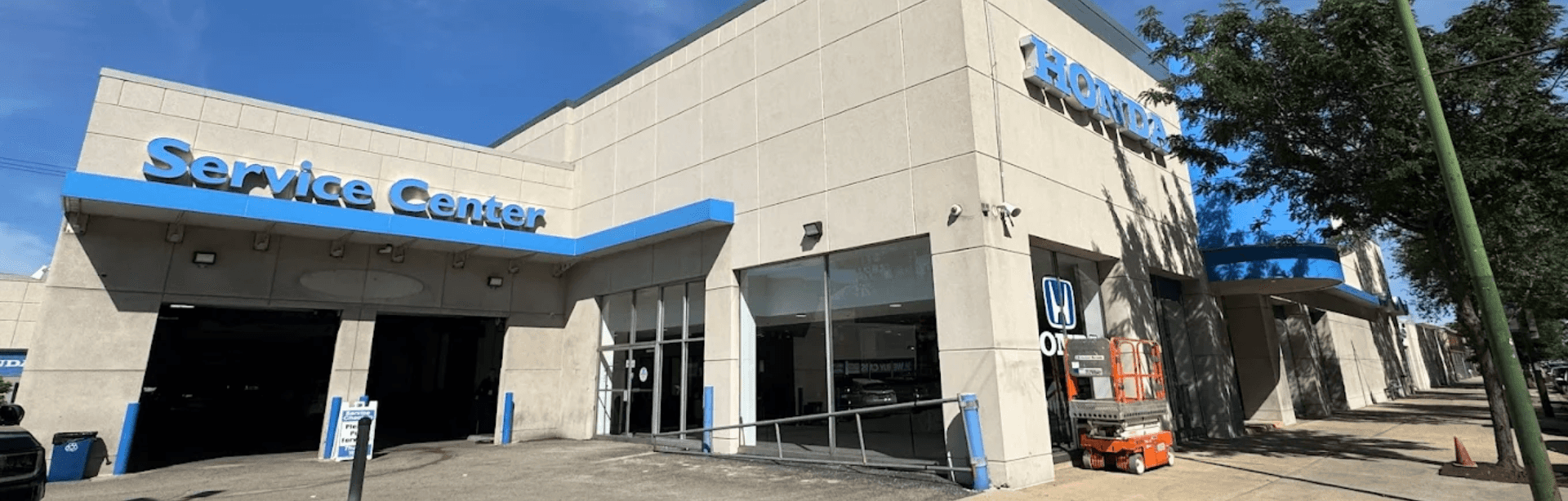
Victory Honda of Chicago Northside has been proudly serving the community for over 50 years, committed to providing an exceptional customer experience. Our dealership is dedicated to being a trusted partner for all your automotive needs, from sales to expert service. We strive to build lasting relationships with our customers in Chicago, Evanston, and beyond by delivering quality, transparency, and integrity in everything we do.
Related Articles:
A Chicago Driver’s Guide to Choosing the Right Honda Dealership